

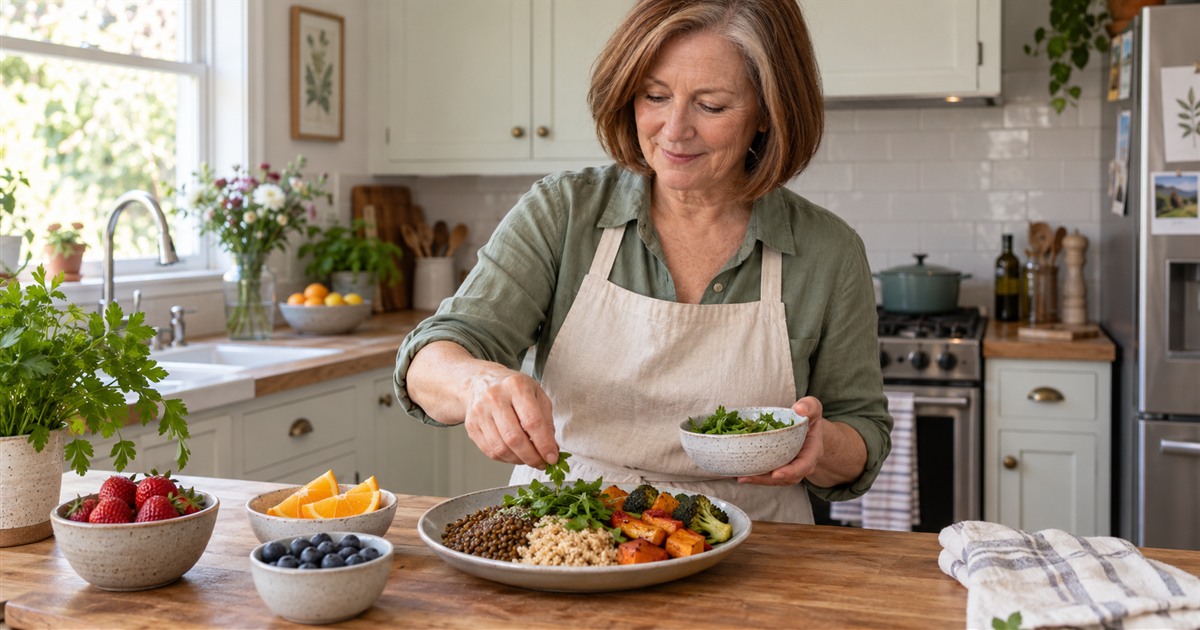
Colorful food can make a meal inviting, and a meaningful routine can give you a moment to reflect. If you enjoy chakra symbolism, you might connect a red fruit with steadiness or green vegetables with care. That is a personal association—not evidence that the food repairs an energy center.
No food color is an established treatment for a blocked chakra. Depression, anxiety, illness and fatigue should not be blamed on chakra blockages. Eating is important for nourishment; spiritual symbolism should not replace healthcare, justify restrictions or make you feel responsible for symptoms.
Keep symbolism separate from nutrition
The seven-chakra framework used here is a spiritual model, not a map of medically established organs. Teachings and color associations vary; this article’s meal ideas are optional contemporary prompts, not a universal traditional diet.
A fruit or vegetable’s color does not tell you everything about its nutrients, and white or brown foods are not spiritually inferior. Rice, oats, beans, lentils and other familiar staples can belong in meals. You do not need expensive ingredients or all seven colors at once.
The CDC’s healthy-eating guidance encourages varied nutrient-dense foods, including vegetables, fruits, protein foods and whole grains. Its color advice concerns dietary variety—not matching food vibrations to chakras. Adapt meals to allergies, medical needs, cultural preferences and what you can afford.
Seven chakra themes, with ordinary food ideas
Use these sections as a flexible menu of ideas. The reflective question is optional; none of the examples diagnoses a blockage, guarantees an emotion or activates a psychic gift.
1. Root: a prompt for steadiness
Red tomatoes, radishes, beets, strawberries and raspberries can supply the color theme. Potatoes, carrots, onions and garlic are other ordinary cooking ingredients. Spinach is a leafy vegetable, not a root vegetable; being green does not make it unsuitable for a meal.
Meal idea: lentils with rice and cooked tomatoes, or a familiar soup with vegetables you enjoy. If the “root” theme matters to you, ask what practical support would make your week steadier. A red meal cannot solve a financial difficulty or certify that your energy is balanced.
2. Sacral: a prompt for creativity
Oranges, mango and pumpkin offer orange-colored options. You might try a different seasoning in pumpkin soup or serve fruit alongside a usual meal. Creativity can mean adapting a recipe, not buying a special ingredient.
Honey, chocolate, pasta and butter are not remedies for self-esteem or sexual concerns. Honey counts as added sugar; “natural” is not a reason to add it for an energy effect. Grapefruit needs a separate medication check, explained below. Enjoyment is welcome without promising that a food changes a chakra.
3. Solar plexus: a prompt for choice
Corn, pineapple and bananas can provide a yellow theme. Yogurt and cheese may fit your eating preferences, though their colors do not define their nutritional role or spiritual purpose. Use suitable alternatives if you avoid dairy.
Meal idea: a meal with corn and a protein food you already use, with fruit if you want it. The reflective question might be, “What choice can I make today?” Depression or feeling out of control does not establish a solar-plexus blockage; seek help for the actual concern.
4. Heart: a prompt for care
Broccoli, green beans, peas, kale and spinach offer green options. Rice and lentils can accompany them without needing to match the color. Choose preparation that you like and that fits any dietary advice you have received.
Meal idea: cooked greens with a familiar grain and beans or another protein food. Care might mean preparing enough to share or making a manageable meal for yourself. Difficulty expressing emotion or forgiving someone is not proof that a food-related chakra treatment is needed.
5. Throat: a prompt for communication
Blueberries, blackberries and dragon fruit can be enjoyable foods, but they do not make someone truthful or resolve a communication problem. You do not need to locate a perfectly blue food to follow a symbolic theme.
Meal idea: berries with a usual breakfast or snack. If useful, think of one clear request you would like to make. Ginseng is not an essential ingredient and should not be presented as a simple substitute for ordinary fruit; herbal products require their own safety consideration.
6. Third eye: a prompt for perspective
Grapes, blackcurrants, blackberries, cooked eggplant or purple carrots can provide purple shades. Availability and preference matter more than achieving a precise hue.
These foods do not enable visions, spirit-guide contact or knowledge of the future. If intuition interests you, our guide to exploring and checking intuitive impressions keeps experience separate from evidence. A useful meal-time question could be, “What information am I missing?” rather than “What hidden message is this food giving me?”
7. Crown: a prompt for meaning
There is no need for a special crown-chakra food, a cleanse or a fast. Skipping meals is not a measure of spiritual development, and drinking water does not prove that an energy center has opened. Follow any individualized fluid or dietary advice you have been given.
If a short reflection fits your beliefs, you can choose gratitude or another value without changing your meal. Our guide to spiritual meditation and personal intention explains optional practices without requiring an unusual experience.
A meal check that keeps the priorities clear
- Nourishment first
- Build a meal you can eat and enjoy, with enough variety for your needs. Color is not a complete nutrition plan.
- Meaning stays optional
- A color may remind you of a value. No ingredient owes you confidence, healing or psychic ability.
- Care is not replaced
- Respect allergies, medication advice and dietary guidance. Address symptoms with appropriate healthcare.
Check interactions and avoid restrictive rules
The FDA warns that grapefruit and grapefruit juice can interact with some medicines. Read your medicine’s information and ask a pharmacist or healthcare professional whether it affects your particular prescription or over-the-counter product. Do not stop a medicine to accommodate a symbolic food list.
The NCCIH’s herb–medicine interaction guidance also explains uncertainties and possible risks with herbal products, including Asian ginseng. “Spiritual,” “natural” or “energy boosting” does not make a supplement universally safe. This guide does not recommend a dose or product.
Avoid color-only meals, detox promises and compulsory fasting. If food rules cause fear, guilt or restriction, step back and seek suitable support. For a health condition or a major dietary change, a qualified clinician or registered dietitian can help personalize advice.
You can retain a meaningful ritual while making ordinary choices: use what is available, nourish yourself, and leave supernatural outcomes unpromised.
Frequently asked questions
Can eating a particular color unblock a chakra?
Food colors can be used as personal symbols, but they do not establish that a chakra was blocked or unblocked. Choose foods for nutrition, preference and your health needs rather than expecting an energy treatment.
Do depression, anxiety or fatigue mean I have a blocked chakra?
No. These experiences do not diagnose a chakra problem. Seek appropriate healthcare support for persistent or concerning symptoms, and do not replace treatment with a color-based diet or spiritual service.
Must I eat seven colors every day or fast for the crown chakra?
No. There is no requirement to complete a chakra-color checklist or skip meals to become spiritual. Use varied meals that fit your needs, access and medical advice; symbolism can remain optional.
Are grapefruit and ginseng safe additions to a chakra-food plan?
They should not be recommended as universal spiritual remedies. Grapefruit can interact with some medicines, and herbal products such as ginseng may also raise safety or interaction concerns. Check with a pharmacist or healthcare professional before adding them.
Combining dietary tips with chakra balancing could offer a holistic approach to health. It’s worth exploring further, especially within the context of complementary therapies.
The article touches on an interesting intersection of nutrition and energy work. It’s a reminder that holistic approaches can incorporate many different aspects of well-being.
While the idea of aligning chakras through diet is intriguing, more empirical evidence would be useful to fully validate these claims.
The article provides a comprehensive overview of how food colors can potentially impact chakras. It’s interesting to consider the correlation between diet and emotional well-being.
The link between specific food colors and chakra health is a novel concept. It aligns well with the principles of color therapy and might be beneficial for those open to alternative health practices.