

“New Earth children” is a phrase used in some New Age spiritual conversations for people imagined to help create a kinder, more conscious world. Despite the word children, writers may apply it to adults as well. It is a belief-based identity, not an established generation, diagnosis or proven description of someone’s origin.
The idea can express hope for a better future. It becomes less helpful when hope turns into a claim that certain people are superior, that every hardship proves a cosmic assignment or that children must repair the world. You can value compassion without accepting those conclusions.
Hope is not an obligation. A child does not need to earn care by being spiritually gifted, unusually mature or responsible for other people’s happiness. Adults remain responsible for support, safety and age-appropriate expectations.
What believers mean by a New Earth
Within this language, New Earth may mean a hoped-for spiritual transformation, a shift in consciousness or a world with less harm and more cooperation. Some use it metaphorically; others describe literal changes involving souls, dimensions or ascension. Those interpretations are not interchangeable, so ask what a speaker actually means.
One example in modern spiritual publishing is Dolores Cannon’s The Three Waves of Volunteers & the New Earth. Its publisher describes volunteers from other realms helping Earth ascend. That identifies a particular author’s spiritual framework, not evidence that such volunteers exist or that a reader belongs to a wave.
The phrase does not give you a reliable test of identity. Caring about nature, feeling different or wanting less cruelty can matter in ordinary human life without establishing extraterrestrial origins, past lives or a special frequency.
How the related labels fit together
Starseed, lightworker and old soul sometimes appear in the same conversation. Broadly, starseed language concerns a claimed non-Earth soul origin; lightworker language emphasizes a spiritual helping role; old soul language suggests experience across lifetimes or, more casually, maturity. Different authors use these words differently.
They are descriptions within belief systems, not interchangeable facts about a person. Someone may like one term and reject another. You do not need to collect labels to be thoughtful, and you can stop using an identity that no longer feels useful.
The separate guide to indigo, crystal and rainbow child beliefs explains those color labels and their limits. Here, the focus is the larger story of a planetary mission—and how to keep that story from becoming pressure.
Separate an inspiring idea from a demanding role
Meaning
“I want to act with care.” A personal value can guide you without proving a cosmic identity.
Action
“I can choose one useful step.” Make it specific, safe and respectful of other people’s choices.
Limit
“I cannot carry everything.” Rest, disagreement and asking for help do not cancel your worth.
A helpful interpretation leaves room for ordinary limits. You can feel angry about unfairness without being filled with darkness. You can make a mistake without failing a mission. You can listen to someone who disagrees without assuming they are spiritually asleep.
Claims of being more evolved can undermine the compassion the idea is supposed to encourage. Judge conduct by its effects: does a person listen, respect consent and accept responsibility? A spiritual label does not excuse cruelty or make anyone’s advice automatically correct.
Turn care for the world into a manageable step
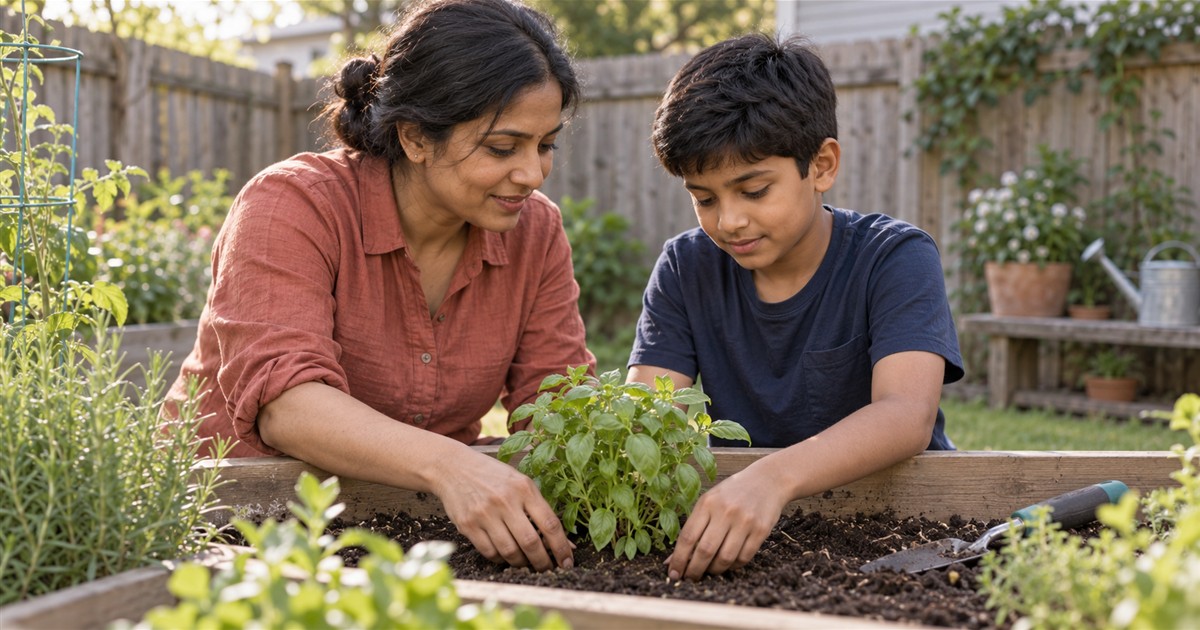
Start with something you can observe rather than an invisible shift you must somehow produce. A small garden task, a considerate conversation or a well-defined community activity can express a value without being evidence of ascension.
- Name the concern. What specifically matters to you: waste at home, a lonely neighbor, an unfair rule or another concrete issue?
- Choose a bounded action. Decide what you can offer, how much time it takes and when you will stop.
- Check consent and safety. Ask before helping someone, and follow the requirements of any group or activity.
- Share responsibility. Work with other people when appropriate instead of assuming you alone must fix the problem.
- Review the result. What actually happened? Adjust the plan without calling every setback a spiritual test.
For example, a family concerned about waste might choose one household habit to discuss and try for a week. A child can help suggest ideas, but the adults handle practical decisions and accept that the experiment may need changing. This is an illustrative activity, not a reported reading or proof of a planetary calling.
Let children care without making them responsible for everything
If a child asks about the future, listen before assigning an explanation. They might want information, reassurance or permission to talk about an upsetting story. Saying “You chose this mission before birth” can close a conversation that needs attention to what they are feeling now.
UNICEF’s advice on talking about climate change recommends honest, age-appropriate conversation, listening and opportunities for action without forcing children into activism. A shared activity should be an invitation, not a test of whether they are good enough.
Make room for play, friendships, learning and days when the child does not want to discuss global problems. Avoid praising them as the family’s healer or telling them that adult conflict is theirs to resolve. Ordinary needs do not become less important because a spiritual story sounds uplifting.
If you use New Earth language at home, frame it as a belief you hold rather than a role the child must accept. They can disagree, ask questions and choose different words. Their private experiences should not be posted as proof of special abilities.
Do not turn distress into proof of a calling
Worry about the world is not evidence that you are a starseed or that your body is undergoing ascension. Spiritual explanations should not replace attention to health, relationships or daily functioning. You can seek appropriate support while keeping—or reconsidering—your beliefs.
UNICEF’s climate-anxiety guidance recognizes worries about environmental change and notes that professional support may be important when a child’s daily life, school or relationships are affected. Concern is worth listening to; it should not be dismissed as a necessary spiritual struggle.
For adults, a helping identity also needs boundaries. The distinction between compassion and constant rescue in earth-angel beliefs and healthy limits applies to a New Earth mission too. You do not have to ignore exhaustion to show that you care.
A better future does not require a special rank
The grounded part of this idea is the wish to live with more care. Keep that wish, if it matters to you, while holding supernatural explanations as beliefs rather than facts. Choose actions you can evaluate, allow other people their own views and keep responsibility shared.
No one has to prove they are a New Earth child to help a neighbor, protect a child’s choices or learn something useful. Hope can stay hopeful without becoming a burden.
Frequently asked questions
What does New Earth children mean?
It is a phrase used in some New Age beliefs for people imagined to help bring about a kinder or spiritually transformed world. It is not an established generation, clinical category or proof of a supernatural mission.
Are New Earth children more evolved than other people?
That is a spiritual claim, not an established fact. Kindness, curiosity or sensitivity does not prove a higher soul rank, and no one needs a special label to deserve respect.
Should I tell my child that they were born to save the planet?
Avoid placing that obligation on a child. Offer age-appropriate information, listen to their feelings and let them choose manageable ways to help while adults share responsibility.
Can I care about the idea without believing in starseeds or ascension?
Yes. You can treat it as a hopeful metaphor and focus on concrete, respectful actions. Personal meaning does not require accepting claims about extraterrestrial origins, past lives or a coming spiritual shift.
The article offers a refreshing perspective on global improvement. It would be interesting to explore how these ‘new earth children’ align with existing psychological theories on altruism and social change.
While the notion of old souls and lightworkers is compelling, it’s important to approach such concepts with a critical mind and consider various interpretations.
The concept of starseeds and lightworkers is intriguing, but it would be beneficial to have empirical evidence or scientific research to support these ideas.
The idea of individuals being destined to improve the world is fascinating. However, how do these ideas reconcile with historical and sociopolitical contexts?
That’s a valid point. Understanding the intersection between these metaphysical beliefs and tangible historical events may offer deeper insights.
What mechanisms do these ‘new earth children’ employ to bring about the supposed changes? Are there documented instances of their impact?
Without concrete evidence, it’s challenging to fully accept the existence and influence of these lightworkers and starseeds.
Good question. Data-driven case studies or anecdotes could help substantiate the claims made in the article.