


Online dating can lead to genuine connections, but affection should not be used to hurry you into payments or surrendering privacy. Look at the person’s requests and response to boundaries rather than judging by nationality, age, gender or a profile’s appearance.
This guide revisits seven familiar warning areas. None is a standalone test of a stranger’s intentions. You do not have to prove fraud before declining a request, slowing a conversation or choosing not to continue.
Cover: AI-generated illustrative home-patio pause, not a dating client or testimonial.

1. Distance: consider the story, not the passport
Living far away does not make someone dishonest. A local address does not make them trustworthy either. The practical question is whether the information and requests make sense and whether you are comfortable with the proposed relationship.
Be cautious when an explanation for not meeting becomes a reason you must pay. “I work abroad” and “You must transfer money before we can speak again” are different claims. You are allowed to decline the second without making assumptions about people from a country or profession.
2. Fast declarations: you can choose a slower pace
People express feelings differently. An early declaration of love does not, by itself, establish fraud or desperation. It becomes concerning when it is used to demand exclusivity, secrecy, money or an immediate commitment you do not want.
Ask whether your actual pace is respected. You do not owe constant availability, personal documents or a purchase because someone says you are soulmates. Our guide to relationship readiness and mutual boundaries treats privacy and choice as compatible with closeness.
3. Money requests: keep affection separate from transfers
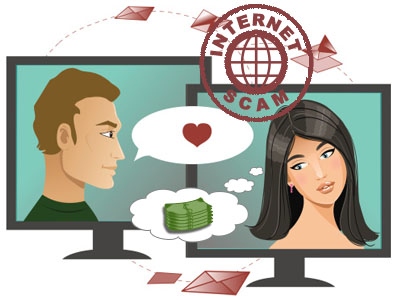
The FTC’s romance-scam guidance advises against sending money or gifts to a sweetheart you have not met in person. It describes fabricated emergencies, travel costs and investment offers used to obtain payments. A moving story is not a reason to bypass this boundary.
Do not give a new contact access to your accounts or let them route funds through you. A relationship is not an obligation to finance a stranger’s plans. You may feel compassion and still decline.

4. Video calls: not a complete identity test
Someone may decline a video call because of access, privacy, disability, comfort or other circumstances. Do not claim that every refusal exposes a scam. Equally, having a call does not independently establish every part of the person’s story or make a payment safe.
You can decide that a particular communication arrangement does not suit you. That choice does not require an accusation. Do not pressure someone into showing their home, identity documents or private surroundings to earn your trust.
5. Photos: useful clues with limits
One photograph is not proof of a stolen identity, and many photographs are not a guarantee of honesty. Consider whether the profile’s claims are consistent, without assuming an attractive or polished image supplies that answer.
The FBI’s romance-scam guidance recommends checking profiles and images, moving slowly and watching for isolation or pressure to leave a platform quickly. A reverse-image search can reveal conflicting uses; a clean search is not an identity certificate.
Keep the check proportionate. Do not publish someone else’s pictures, contact their relatives or demand private documents as a test. You can stop communicating if uncertainty makes the arrangement unsuitable.
6. Phone numbers: privacy is not evidence of a secret life
A person may prefer to keep a phone number private or use a platform’s messaging tools. That does not establish that they are married, concealing their gender or lying about their age. You are entitled to the same privacy.
Focus on consent and the broader pattern. A demand that you leave a platform, hide the relationship from friends or hand over sensitive information is different from a mutually chosen way to chat. You do not need to trade your own contact details to justify asking questions.
7. Celebrity claims: fame is not verification
A famous name or familiar photograph does not establish who is messaging you. Do not dismiss or accept an identity solely from a story about a celebrity’s schedule. Examine the actual request and avoid treating claimed status as authority over you.
Do not pay an access fee, release charge or private intermediary simply because the sender says a relationship depends on it. You can decline without resolving who is behind the profile. Ordinary payment and privacy boundaries still apply.
If you choose to meet, keep your own pace and exit options
RAINN’s safer-dating guidance recommends a populated public location, control of your transportation and letting someone trusted know your plans. It emphasizes that precautions do not guarantee safety or make you responsible for another person’s harmful actions.
Meeting in person does not oblige either person to continue dating. You may leave, change your mind or decline further contact. A pleasant first meeting is also not a guarantee about a later request for money.
If money or information has already been shared
Stop further transfers and save the exact messages, account names, profile links and receipts securely. Do not publish private information or prolong a confrontation. Report the profile using the platform’s genuine reporting tools.
The FTC’s recovery guide explains options for different payment methods and compromised accounts. Contact your bank, card issuer or payment service promptly through its official app, website or known number. Ask about available options; no refund is guaranteed.
For U.S. reports, the FBI’s guidance links to the Internet Crime Complaint Center, and the FTC’s romance guide links to its reporting service. Use appropriate local consumer-protection or police channels elsewhere. Seek local emergency help for immediate physical danger when safe.
If a separate paid spiritual adviser offers to guarantee reunion or recover a relationship through urgent fees, our guide to fear, secrecy and escalating payment pressure explains that additional sales pattern. A reading cannot verify an online identity or replace practical reporting.
Being deceived does not make you foolish. Responsibility lies with the person exploiting trust. Speak with someone supportive and take the next practical step without paying another person for a guaranteed recovery.
Frequently asked questions
Does living in another country mean an online match is a scammer?
No. Nationality and distance do not establish dishonesty. Evaluate specific conduct, such as changing stories, repeated payment demands, pressure for secrecy or refusal to respect your boundaries.
Does a video call prove that an online romance is safe?
No. A conversation does not independently verify every identity claim, intention or payment request. A person can also decline a call for legitimate privacy, access or comfort reasons. Do not use either a call or its absence as a complete verdict.
Should I send money to a romantic contact I have never met?
The FTC advises against sending money or gifts to a sweetheart you have not met in person. An urgent story or declaration of love does not remove the risk. Do not share account credentials or let a new contact direct an investment.
What should I do if I already paid a suspected romance scammer?
Stop further transfers, save the messages and transaction records, and contact the payment provider promptly through official channels. Ask about available reversal or dispute options; recovery is not guaranteed. Report the profile to the platform and use appropriate consumer-protection or police channels.
The article offers practical advice on how to detect and avoid online dating scams. It is important to be vigilant, especially with the increasing sophistication of scammers.
Highlighting the red flags, such as proclaiming love quickly or asking for money, helps readers identify potential scams early. Awareness is the first step to prevention.
The advice about checking someone’s background online can be very useful, though it may seem intrusive to some. It’s a necessary step to confirm the authenticity of the person.
The emphasis on avoiding individuals who can’t video chat or provide a phone number is a key point. These are simple yet effective ways to verify someone’s identity.
The suggestion to meet in a public place when taking the relationship offline is crucial. It ensures safety and provides a controlled environment for the first in-person interaction.