

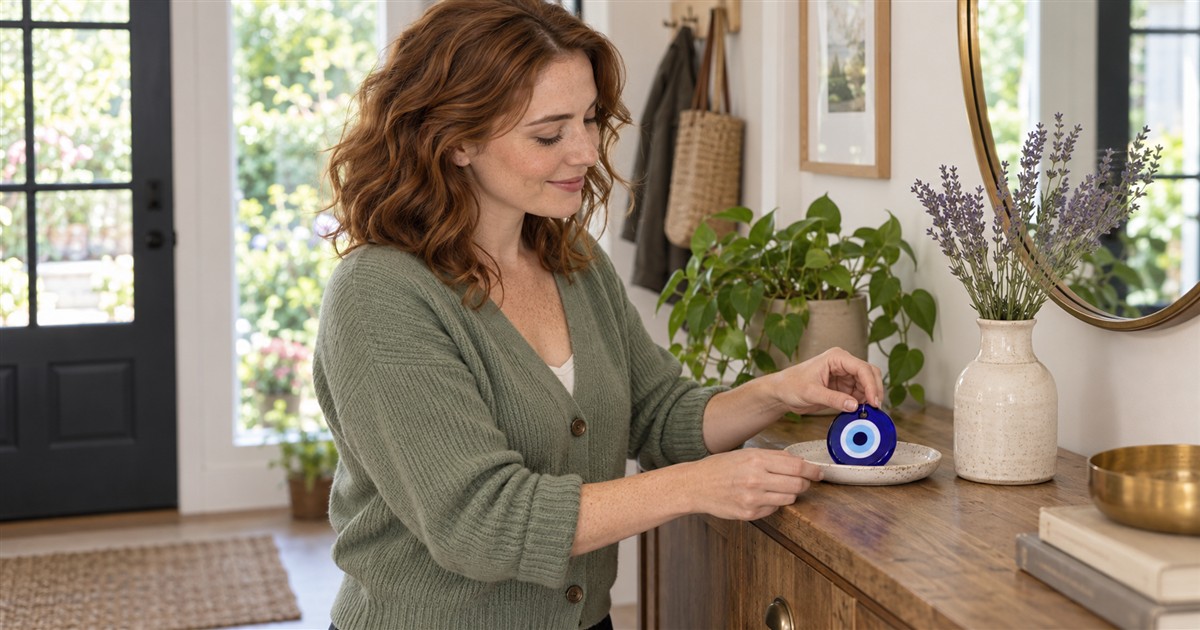
An evil-eye charm can be a piece of jewelry, a family keepsake or a symbol of protection in a cultural or spiritual tradition. Its meaning matters to many people. That is different from showing that another person’s glance caused an illness or that an amulet can prevent harm.
If you are asking how to be protected from the evil eye, start by separating symbolic comfort from practical safety. You can respect a tradition without treating ordinary setbacks as evidence of a curse, blaming someone for your symptoms or buying urgent “cleansings.”
What does the evil eye mean?
The evil eye is a belief that a glance—often associated with envy—can bring misfortune. Beliefs about it, the objects associated with it and the ways people respond vary across communities and families. A person may wear a charm as an expression of heritage, faith, affection or style; you cannot infer their beliefs simply from the jewelry.
The Pitt Rivers Museum’s amulet trail describes a Syrian composite amulet and an Istanbul market selling blue glass eye charms. These are examples of cultural objects and protective beliefs—not evidence that the objects stop illness or misfortune.
A blue concentric eye charm and a hand-shaped amulet are not interchangeable labels for every tradition. Nor should unrelated deities, prayers and customs be combined into a universal “protection recipe.” If an object comes from a tradition you do not know well, learn how its makers or community describe it rather than assuming a single meaning.
Three different kinds of protection
Symbolic comfort
A charm, prayer or family custom may feel meaningful. Choose it freely, without claiming that it guarantees safety.
Practical boundaries
Respond to actual behavior: limit unwanted contact, protect private information and decline pressure to spend money.
Healthcare
Symptoms need appropriate care. Do not use an evil-eye explanation to diagnose yourself or delay help.
These distinctions let you keep a meaningful practice while acting on what you can actually observe. You do not have to reject your culture to seek medical help, and you do not have to accept a supernatural explanation to set a boundary.
What if I feel someone is jealous of me?
A look, a compliment or a feeling of unease does not establish another person’s intentions. Try to distinguish an interpretation—“They must be sending bad energy”—from an observable event, such as a repeated insulting message or an unwanted visit.
You can respond to the event without making an accusation about invisible harm. Adjust what you share online, leave a hostile conversation or tell someone which behavior you want to stop. If there is harassment or an actual threat, preserve relevant evidence and seek appropriate real-world help. Our guide to responding to fears of a psychic attack focuses on grounded boundaries and safety.
Do not investigate friends or relatives as possible “curse senders” because of a run of bad luck. For a relationship disagreement, address the words, actions and expectations involved. For a work problem, look at the task, communication or practical constraint. The feeling that several things went wrong together does not identify a hidden cause.
Headaches, fatigue and other symptoms are not an evil-eye test
A spiritual interpretation cannot tell you why you are unwell. A headache or tiredness may have many explanations; the presence of a charm, a recent compliment or someone’s supposed envy cannot diagnose the cause.
The NHS headache guidance lists ordinary possible causes and advises medical review for recurring or worsening headaches. It also identifies emergency warning signs, including a sudden extremely painful headache or a headache with weakness, difficulty speaking or loss of vision. Seek local emergency help for those symptoms rather than attempting a ritual.
For other persistent, worsening or worrying symptoms, speak with an appropriate healthcare professional. During pregnancy or when a child is unwell, use maternity or pediatric advice—not claims that these people are especially vulnerable to supernatural energy. An amulet is not a medical safeguard, and spiritual practices should not replace prescribed care.
If you choose a charm, choose it without fear
You might wear a piece because you like its design, keep a family gift or display it as a reminder to respond calmly to envy. No particular price, metal, placement or side of the body establishes protection for your finances, relationships or health.
A useful approach is to ask three questions before buying: What does this object mean to me? Can I comfortably afford it? Is the seller describing an object, or promising to prevent disaster? You do not need an expensive replacement because someone says the cheaper one cannot protect you.
For a display, think about ordinary safety: secure it where it will not fall, avoid obstructing a doorway and keep small or sharp objects out of reach of children and pets. Do not put necklaces, cords or loose charms on babies as protection. The FDA’s warning about teething jewelry documents choking and strangulation injuries in infants and children. That warning concerns teething products, but it is a reason not to mistake a symbolic necklace for a safe infant-care measure.
What if the charm breaks?
Some people interpret a broken charm through their own tradition. You may choose to acknowledge that meaning, but the break itself does not show that it absorbed an attack. Inspect the clasp, cord, glass or other material before deciding what to do.
- Stop wearing damaged jewelry. A broken fitting or sharp edge is a practical problem.
- Handle fragments safely. Keep them away from children and pets and dispose of sharp pieces appropriately.
- Repair it if that is suitable. A jeweler can assess the object; repair is not a spiritual emergency.
- Replace it only if you want to. You can keep a photograph or memory of a sentimental item without buying another one.
There is no need to rush into a purchase because someone claims a gap in your protection has opened. A personal decision about a keepsake should remain yours.
Keep optional practices simple and safe
If prayer, a brief reflection or a family custom is meaningful to you, choose a version that does not introduce hazards or increase fear. You can sit quietly and name one practical step you want to take today. No flame, oil, smoke or costly ritual is required.
Avoid putting unfamiliar substances on skin, swallowing ritual preparations or using smoke around people who may be sensitive to it. Do not involve children in a practice that frightens them or makes them responsible for preventing harm. Stop any practice that leaves you feeling you must repeat it to keep everyone safe.
If a seller or reader says you are in danger unless you immediately pay for a cleansing, step away. Our guide to pressure and boundaries during psychic readings explains when to pause or end the conversation. You do not owe a purchase to disprove a threat.
Respect the meaning; keep your choices
The safest use of an evil-eye symbol is as an optional expression of meaning—not as a diagnosis, a reason to blame someone or a requirement to spend money. You can enjoy the object, learn about its context and still use ordinary care for your health, home and relationships.
If fear about curses is interfering with sleep, everyday activities or your ability to make decisions, speak with someone you trust or a qualified mental-health professional. Support can help you address the distress without demanding that you abandon a cultural or spiritual identity.
Frequently asked questions
Do headaches or bad luck prove that someone gave me the evil eye?
No. Headaches, tiredness, disagreements and setbacks do not establish a supernatural cause or identify someone as responsible. Take health symptoms seriously and address practical problems on their own terms.
Can I wear an evil-eye charm without treating it as medical protection?
Yes. You can value it as jewelry, a cultural symbol or a personal reminder. Its meaning does not establish that it prevents illness or harm, and it should not replace healthcare or ordinary safety precautions.
Does a broken evil-eye bracelet mean I need urgent protection?
No. A broken clasp, cord or bead is not evidence of a curse. Stop wearing damaged jewelry, handle sharp pieces safely and decide whether to repair or replace it for practical or personal reasons.
Should babies wear an evil-eye necklace for protection?
Do not put necklaces, cords or small loose charms on babies as protection. These objects can create physical hazards. Choose a safe display well out of reach instead, and follow pediatric advice for any health concern.
It’s fascinating to read about the different ways people protect against the evil eye, from jewelry to mantras. The diversity in protection methods reflects the varied ways people handle negative energy.
The article provides an extensive overview of the concept of the evil eye across various cultures. It’s interesting to see how common this belief is despite the geographical and cultural differences.
The article touches on an important aspect of human psychology – the belief in external forces influencing our lives. Whether one believes in the evil eye or not, it highlights the universal human concern with safeguarding against misfortune.
The variety of names and customs related to the evil eye across different cultures is intriguing. This shows how deeply rooted and widespread the concept is, transcending borders and belief systems.
The detailed descriptions of the signs and symptoms associated with the evil eye could be very helpful for those who are looking for explanations for unexpected bad luck. However, it’s crucial to also consider practical and medical explanations.